.jpg) By: Dr. Isaac M. Alshrouf
By: Dr. Isaac M. Alshrouf Several missing teeth in different areas can affect far more than your smile. Separate gaps may make chewing uneven, change the way you speak, and leave you feeling less comfortable at meals or in social settings. Whether teeth were lost recently or over many years, the full picture matters.
You may wonder if every missing tooth needs its own treatment. At Shrouf Dental House in The Villages, Florida, we look at your remaining teeth, bite, bone support, and goals before discussing dental implants, implant-supported dentures, All-on-4, All-on-6, or full mouth reconstruction. August can be a helpful time to begin an evaluation if you want to plan around fall activities, holiday meals, travel, and financial decisions.
A missing tooth does not always stay an isolated problem. Teeth beside a gap can drift or tilt toward the open space. Meanwhile, the teeth that remain may take on extra chewing pressure. When gaps are on both sides of the mouth, you may start chewing mostly in one area, which can make your bite feel uneven.
During a missing teeth evaluation, we consider several details before recommending a path forward:
Patients comparing multiple missing teeth replacement options should understand that restoring each gap separately is not always the most practical or cost-effective long-term plan. Someone missing one tooth on each side may be a fit for separate implants. Someone with several loose, damaged, or failing teeth across one arch may need a broader plan.
Bone support is part of that conversation. After a tooth is lost, the jawbone in that area can shrink over time because it no longer receives chewing stimulation through the tooth root. This may affect facial support and the foundation available for implants. When more support is needed, bone grafting for implants may be part of the treatment plan.
Dental implants are designed to replace missing tooth roots and support custom replacement teeth. Because an implant sits in the jaw rather than relying on nearby teeth for support, it can be a strong option when you still have healthy teeth worth preserving.
For limited gaps, we may recommend multiple individual implants placed in different areas of the upper or lower arch. Each implant can support the replacement tooth planned for that specific space while helping restore a more balanced chewing surface.
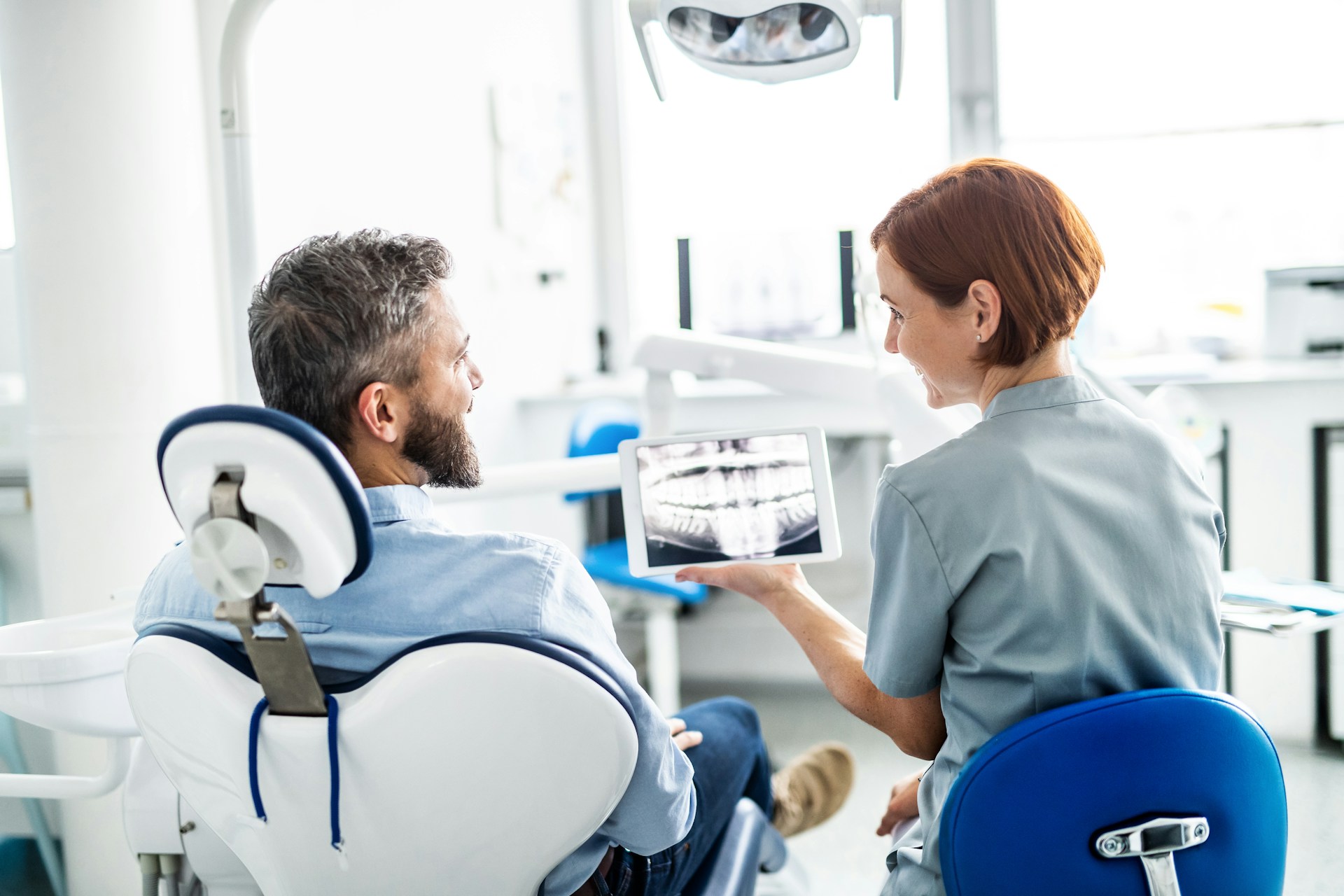
Planning is especially important when several sites are involved. We assess the available bone, the position of nearby structures, your bite, and the final appearance of the replacement teeth. When imaging is part of the planning process, it helps us evaluate the treatment area and plan implant placement with the final smile and bite in mind.
Among multiple missing teeth replacement options, dental implants can offer a durable, fixed solution for patients who want to avoid removable appliances when clinically appropriate. For larger surgical plans, bone grafting, or patients with dental anxiety, sedation availability may help qualified patients feel more comfortable. Any sedation recommendation should be based on your health history and the type of treatment being completed.
Replacing every missing tooth with an individual implant is not always the best answer. If several teeth are missing and others are badly damaged, unstable, or failing, a full-arch plan may provide a more unified solution for function, comfort, and appearance.
Full mouth reconstruction planning allows us to look beyond individual teeth and consider how the whole mouth works together. Depending on your needs, treatment may involve:
All-on-4 and All-on-6 use strategically placed implants to support a full arch of replacement teeth. The right design depends on your bone quality, bite forces, anatomy, and overall treatment plan. A removable implant-supported denture can provide more stability than a conventional denture, while a fixed zirconia bridge remains in place. Neither option is automatically right for everyone.
The goal is not simply filling spaces. A thoughtful full-arch plan should support comfortable eating, a stable bite, and a natural-looking smile that feels like it belongs to you.
Treatment needs vary widely, so dental implant cost in The Villages depends on the details of your case. The number of implants, need for bone grafting, sedation needs, type of restoration, and whether treatment focuses on a few spaces or a full arch all shape the overall plan.
It can help to look beyond the first step alone. Removable dentures may need adjustments over time and may not provide the same stability as implant-supported options. Implant treatment is planned to support long-term function when it is properly designed and maintained.
Some treatment plans can be completed in phases, such as restoring key chewing areas first. In other situations, a full-arch solution may make more clinical sense as one coordinated process. Financing conversations can also clarify treatment phases, eligibility requirements, available payment options, and what is included in a personalized estimate.
Comparing multiple missing teeth replacement options by long-term stability, maintenance needs, comfort, and total treatment value can help you make a more informed decision.
Waiting can allow more shifting, bite changes, bone loss, or strain on the teeth that remain. An implant evaluation helps identify whether separate dental implants, permanent dentures, or full-arch implants are the better fit for your current smile.
The best path starts with a clear view of your bite, bone support, remaining teeth, and personal goals. With a coordinated plan, several missing teeth in different areas can be addressed in a way that supports both daily function and confidence.
At Shrouf Dental House, we help patients understand which multiple missing teeth replacement options may support stronger chewing, comfort, and long-term oral health. Our team can evaluate whether dental implants, implant-supported dentures, or a full-mouth implant approach fits your needs. Contact us to request a personalized missing-teeth evaluation.